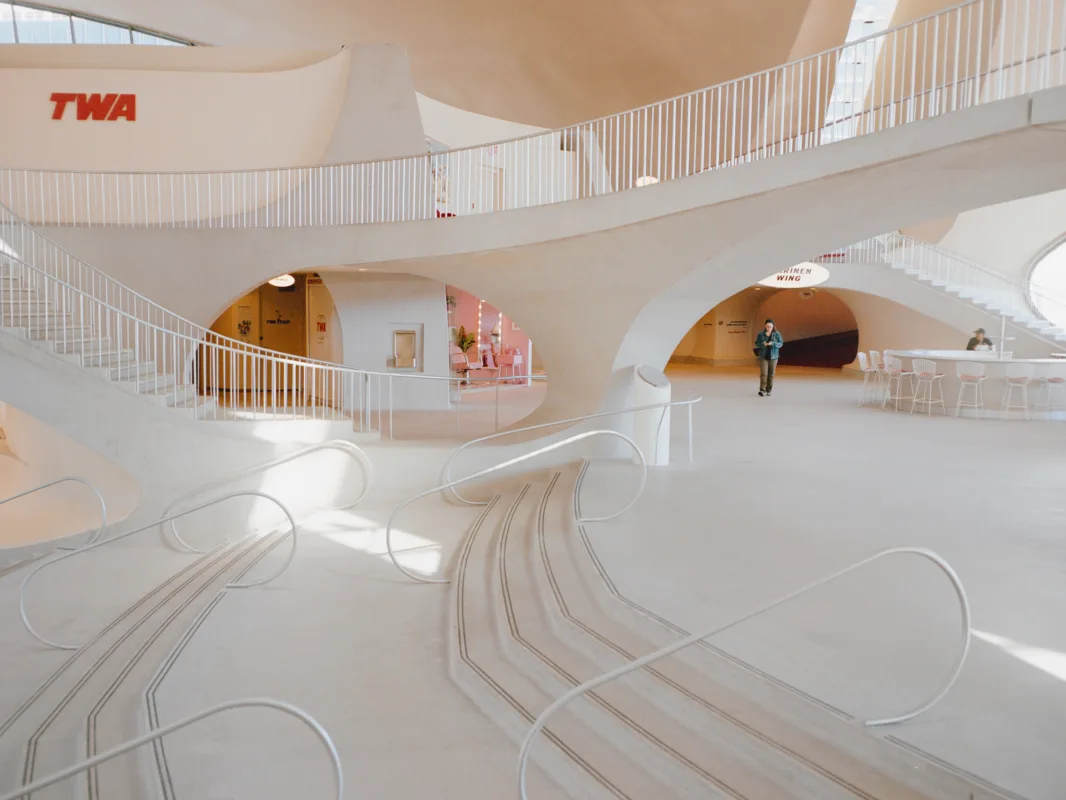
White futuristic interior with curved concrete walls, flowing staircases, and red TWA sign under bright natural light
Blog

Returning to Film Photography

Explore the Beauty of Medium Format Film Photography

Through the lenses of two iconic cameras the Hasselblad 500CM and Bronica RF 645 this article explores the timeless approach to capturing light, detail, and emotion with film. Paired with the rich tones of Kodak Portra films, these cameras offer a magical experience that blends old-school technique with modern artistry. We’ll delve into the characteristics of these analog systems, the magic of Kodak Portra, and why film still holds a place in today’s digital world.

Rediscovering Film in a Digital Age

In a world dominated by digital photography, there’s something magical about returning to the roots of the medium with film. Medium format cameras like the Hasselblad 500CM and Bronica RF 645 provide a tactile experience that goes beyond pixels. Shooting with these cameras encourages a slower, more intentional process, helping photographers frame with care and appreciate the distinct qualities of film. When combined with Kodak Portra films, renowned for their fine grain and stunning color reproduction, the results are both timeless and captivating.

1. The Hasselblad 500CM: Timeless Precision

The Hasselblad 500CM is an icon in the world of medium format photography, built with precision and offering a modular design that allows photographers to swap out lenses, film backs, and viewfinders.

  • Handling and Build Quality: With its solid, mechanical construction, the Hasselblad 500CM forces photographers to slow down and carefully consider each shot. Its waist-level viewfinder offers a unique perspective, encouraging creative compositions.
  • Lens Quality: Equipped with Zeiss lenses, the Hasselblad delivers outstanding sharpness and contrast, especially when paired with Kodak Portra films. Whether shooting portraits or landscapes, this combination produces a cinematic quality that stands out.
  • The Hasselblad Experience: Using the Hasselblad is about more than the final image. The sound of the shutter, the manual winding of the film each step immerses you in the tactile art of photography.

2. The Bronica RF 645: Portability Meets Medium Format

While the Hasselblad 500CM is often considered a studio camera, the Bronica RF 645 offers a more portable solution for street photographers or travelers seeking the benefits of medium format.

  • Rangefinder System: The Bronica’s rangefinder mechanism provides a distinct shooting experience compared to the reflex mirror system of the Hasselblad. It’s more compact and discreet, ideal for documentary or on-the-go photography.
  • Ergonomics and Design: Featuring a vertical 6×4.5 frame, the Bronica RF 645 is perfect for portraits, offering a natural perspective. Its lightweight design and ergonomic controls make it easy to carry for long periods, unlike bulkier medium format systems.
  • Shooting in the Wild: The Bronica RF 645 is well-suited for capturing spontaneous moments while still delivering the detailed, nuanced images characteristic of medium format. Paired with Kodak Portra, it excels in producing beautiful, natural skin tones and stunning image quality.

3. Kodak Portra Films: The Soul of the Journey

What ties the Hasselblad and Bronica together is Kodak Portra film. Available in ISO 160, 400, and 800, Portra is celebrated for its natural skin tones and exceptional color fidelity, making it a favorite among portrait photographers.

  • Kodak Portra 160: Best suited for well-lit outdoor conditions, Portra 160 delivers fine grain and rich detail. When used with either the Hasselblad or Bronica, it excels at rendering vibrant yet soft colors, perfect for landscapes and gentle portraiture.
  • Kodak Portra 400: The most versatile of the Portra family, Portra 400 handles a range of lighting conditions with ease. It retains detail in both highlights and shadows, making it ideal for everyday shooting, from controlled studio light to unpredictable street scenes.
  • Kodak Portra 800: When low light becomes an issue, Portra 800 steps in. While it introduces more grain than the other versions, it retains the signature Portra color qualities, making it perfect for evening portraits, concerts, or indoor shots without sacrificing image quality.

4. Why Shoot Film in a Digital World?

In a time when digital cameras offer convenience and precision, why choose to shoot film especially medium format, which demands more time, patience, and skill? The answer lies in the unique qualities of the images produced by these analog systems.

  • Dynamic Range and Color Depth: Kodak Portra films provide a dynamic range and color depth that digital cameras often struggle to match. The highlights roll off smoothly, and the tones appear more organic and natural.
  • The Film Aesthetic: There’s a charm in the look of film the grain, the subtle imperfections, and the unpredictability. This aesthetic adds character and depth to the images that digital post-processing often attempts to replicate but rarely achieves.
  • Slowing Down the Process: In a world where digital photography can feel instantaneous, film forces a slower, more deliberate approach. With only 12 to 16 shots per roll in medium format, each frame becomes more valuable, leading to more thoughtful compositions and a deeper connection to the subject.

5. The Challenges and Rewards of Analog Photography

While shooting with the Hasselblad 500CM and Bronica RF 645 is rewarding, it’s not without its challenges.

  • Manual Focus: Both cameras require manual focus, demanding practice and patience, especially in fast-moving situations.
  • Limited Shots: With medium format film, you only get 12 to 16 shots per roll, so each frame becomes precious. Unlike digital, there’s no “spray and pray” method.
  • Film Costs: Film and development costs can add up, but the reward is in the tactile experience of holding a well-exposed negative or slide in your hand.

Conclusion:

Shooting with the Hasselblad 500CM and Bronica RF 645, combined with Kodak Portra films, is more than just a photographic journey ’s a return to the essence of the art form. These cameras, paired with the richness of Portra, provide a shooting experience that transcends megapixels and post-processing. Whether capturing the fine details of a landscape or the subtle tones of a portrait, these tools allow you to slow down, focus on composition, and create timeless, beautiful images.
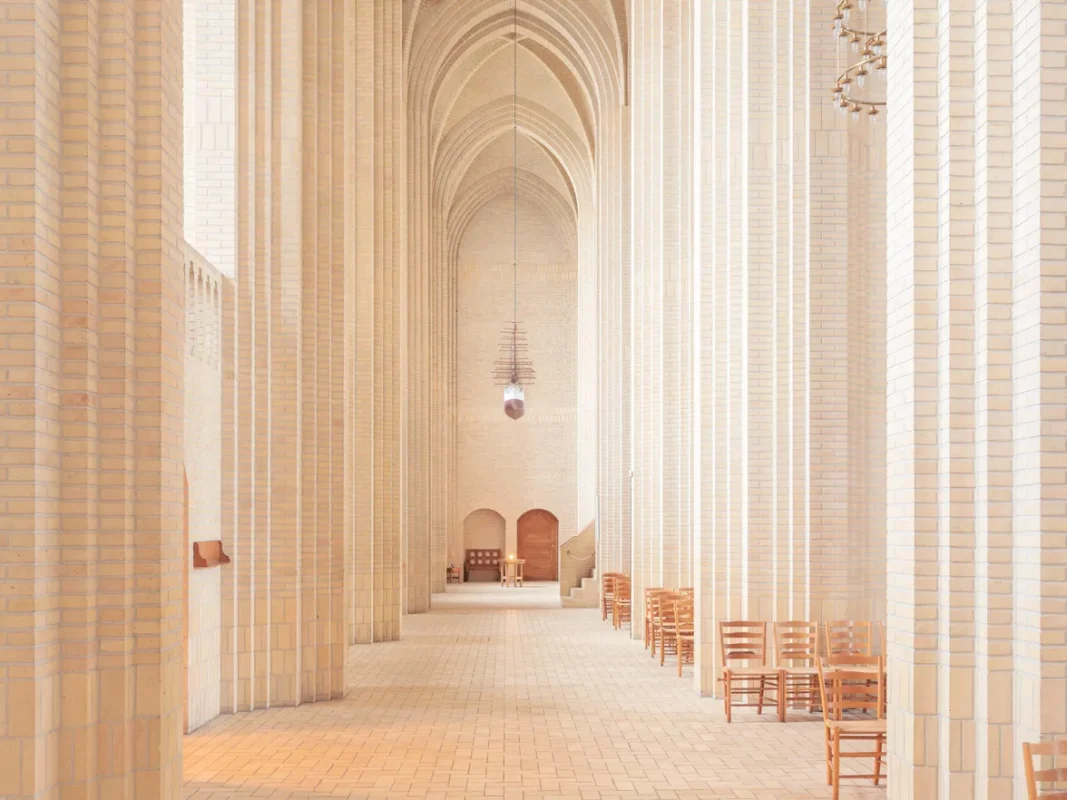
Pale brick arches and light within a Copenhagen church, fine art print by Ludwig Favre
Blog

Q&A architecture photography with Adobe

Q&A with Adobe
Architecture photography

Ludwig Favre

Paris-based architecture photographer Ludwig Favre is known for his pastel-infused images of California and the desert that often draw comparison to a Wes Anderson film.
Favre shares how he achieves his signature style and why for him, a photo never feels finished.


How did you get into photography and what drew you to architecture in particular?
When I was 6 my father showed me how to create a photo using film and a chemical bath. I started doing it professionally about six years ago. Before that I was at an agency doing art direction, and before that I worked for French TV. Picture and motion are a part of my life. When I was at the agency I started selling my photos to galleries, and that made it easier for me to leave my job and do photography full time. In Paris we have a lot of monuments, so when I was a child my father showed me a lot of monuments and took me to exhibitions. It was a part of me. I need to discover new things and experiment with different points of view.

Where do you find inspiration?
From the movies. As a child I watched a lot of films, like the original Blade Runner, and films from Stanley Kubrick. This obsession with the center line shows up a lot in my photos. I also find inspiration from painting and music. I listen to a lot of American music like The Doors and Jimi Hendrix. I lost my father when I was very young and it’s something that reminds me of when he was here.

What do you think makes a great architecture photo and what excites you about a shot?
It’s a good subject combined with good light (not overexposed) and a good moment. I try to have good symmetry and a point of view. When I discover a new place it’s always exciting. My heart beats a lot because I want to capture what I feel in that moment. It’s difficult sometimes for people with me because I run immediately to take what I see. It’s because I’m afraid of losing this moment which matters to me in terms of photography — a certain light or a person may enter the framework of my camera and make the perfect scene.

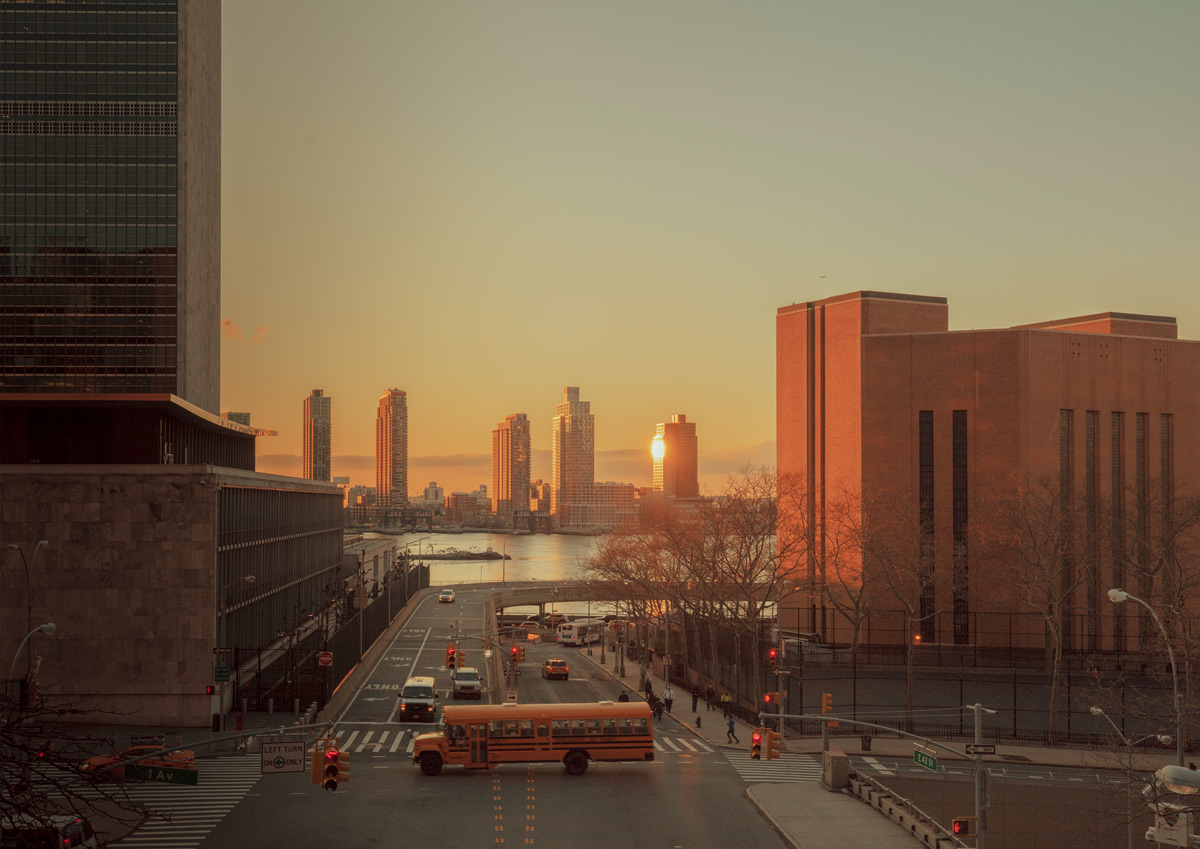
Golden sunset over the Hudson River and Manhattan skyline, fine art print by Ludwig Favre
How would you describe your style and how do you achieve it?
I think it’s about my colors. I have a particular color palette with softer pastels. I don’t know where it comes from, but it’s a representation of my feelings about that moment, place, and time. I want to embellish reality, which can sometimes be very hard  it’s kind of like a dream world. It’s something I create after the shoot in both Lightroom and Photoshop. I prefer shooting in the summer and in the morning. Sometimes I like to take a picture at noon when the light is very harsh. A lot of photographers don’t like to shoot at noon, but the colors are interesting at this time. In terms of the sky, the blue is more electric then.

What are the biggest challenges in shooting architecture photography?
Sometimes I get to a location that I’ve seen on Google Maps and it’s not the same. It can be totally different because of construction, or you don’t have the good weather, or the light is not the same in June as in December. What I see and what I want is not always the same, so it’s difficult.


What’s inside your camera bag?
I have two lenses, a 16–35mm and a 24–70mm. I have two camera bodies, an ND-10 filter for long exposure, a remote, a tripod, a MacBook Pro, two hard drives, four to six SD cards, a DJI drone, a little light (because when I shoot at night I need to see what I’m doing), my iPhone, and my iPad Pro that I use the most when traveling for retouching. My favorite lens is the 24–70mm, because it’s the most versatile for street or landscape photography. But when I’m inside I always use the 16–35mm because I have a wide angle with this one.

What would you suggest as a starter kit?I recommend above all a good lens  a 16–35mm or a 24–70mm to start. This allows you to be versatile and to capture not only architecture, but also landscape or street photography. The camera should be 24mp minimum to be able to make enlargements of good quality. The more millions of pixels, the more details you will have. Phone cameras now have algorithms to improve your images, and you can use them to capture street photography in a very spontaneous way or even landscapes. It’s a tool that you always have in your pocket, and it makes for a very good backup camera.


What are some common beginner mistakes you can learn from?
I’d say it would be not looking for original angles or grasping the way to build a photo, and also using the automatic mode of your camera. I think when you don’t know the basics of photography and don’t play with the aperture, for example, you lose the creativity of the composition.   

What are your favorite Lightroom tools? Do you have any tips for using presets?
My favorites are for color adjustment because my pictures are about the colors. And the Geometry tool. I think it’s very important for me to have a good perspective and to place my principal subject in the center of my photo. I use the Contrast, Highlight, and the Black adjustment presets every time. I use them to create something different in my images. In terms of presets, it’s necessary that your settings reflect your creativity  you need to find a good adjustment between reality and your vision. I adjust enormously the cyan of my photographs to give them a very past dimension. By playing with the red, yellow, and the blue you will create your own photographic style.


How do you use Photoshop for editing?
I use the Curve tool and I use Photoshop for color correction. When I work on an image I always use Lightroom first (and sometimes only Lightroom), but I often use Photoshop to correct my colors and remove what I don’t like. And I like to save my work in Photoshop because I export in 300dpi, so it’s good for large-format images. 

How do you choose what to edit and how do you know when it’s finished?
When I do a shoot, I always have a photo that‘s talking to me more than the other ones  because of symmetry, cropping, or even the light because of that moment. A picture is never finished for me. I never like what I do. I always think I can do better. When I come back to it after, I say “No, it’s not what I want.” But sometimes I see my photo and think okay, stop, it’s finished It’s something I create after the shoot in both Lightroom and Photoshop by Adobe. . You can’t do any better. 


How has COVID-19 changed the way you work?
It’s very difficult for a photographer like me who wants to travel. I have a road trip to California, New Mexico, and Utah planned, but due to the pandemic I don’t know when I can leave. And I want to go to Greenland to do a project with the white polar bears. Not being able to find a new place to shoot right now is very frustrating. I have to think differently and find another place because I can’t stay here and wait to see what’s happening.

What has photography brought to your life?
It’s a big change. I feel free because I can do what I want, when I want. I can’t stay in the same place for a week without moving. It’s a real liberty to do what you love the most and earn money for it, so it’s just incredible. What’s even more wonderful is being able to share my work with everyone because photography is a testimony to the world around us. It’s not just about capturing a moment it’s about creating something unique and personal. It’s something I create after the shoot, using both Lightroom and Photoshop by Adobe.

I’m very lucky.

Learn more on Adobe.com