Enjoy 10% off your first Fine Art print by signing up for the newsletter.

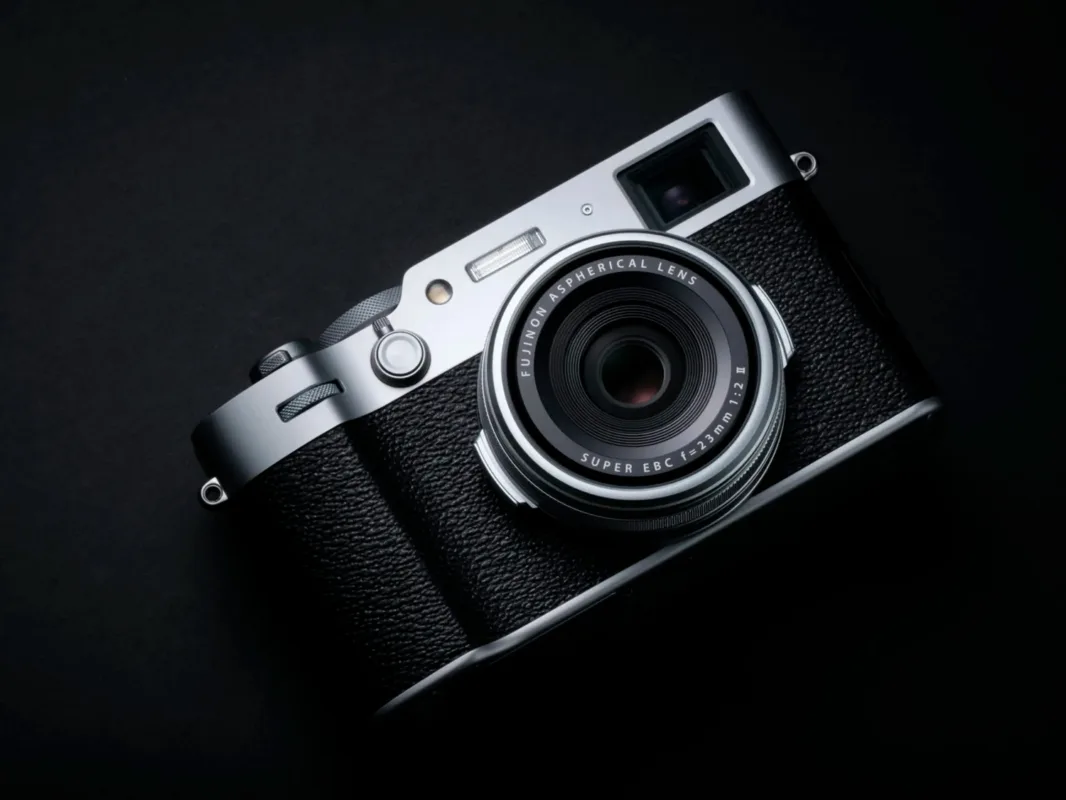
Why I Chose the Fujifilm X100VI
As a photographer who usually works with medium format and high-end gear, I never expected a compact APS-C camera to become an essential part of my daily creative life. But the Fujifilm X100VI changed that, and then changed my mind again. This isn’t just a technical review; it’s the honest story of why this camera won me over, became my favorite everyday companion, and why I eventually stopped using it.
Falling Back in Love with Spontaneity
When you’re used to shooting with large, heavy cameras, photography becomes a ritual: planning, setup, intention. But what about the unexpected moments? The quiet corners of daily life, the light falling just right on a street, a quick portrait of someone passing by?
The X100VI made me fall in love with spontaneous photography again. It’s light, always with me, and it lets me focus on seeing rather than setting up.
Why I Chose the Fujifilm X100VI
I bought the X100VI for three simple but powerful reasons:
- IBIS (In-Body Image Stabilization). A game-changer. I can shoot handheld at slower shutter speeds and still get crisp images. Perfect for low light, or for keeping subtle motion blur intentional rather than accidental.
- 40MP sensor. That’s a lot of resolution in such a compact body. I can crop in post, print large, and still retain beautiful detail and color depth.
- Design and discretion. It looks timeless, almost like a vintage rangefinder, and people don’t read it as a “serious camera.” That helps me capture authentic, unguarded moments, especially when photographing strangers or street scenes.
A Word About Film Simulations
One of the most iconic features of Fujifilm cameras is their film simulations, and the X100VI offers an incredible range. Classic Chrome, Nostalgic Negative, Acros, Provia… each one brings a different emotion and atmosphere.
I often use them as a visual guide while shooting, to see how the light and tones might render. But personally, I shoot mainly in RAW. I like having full control in post-production. Developing the image later in Lightroom, shaping the colors and tones based on how I felt in the moment, feels better than being locked into a baked-in JPEG. Still, I love that Fujifilm gives me both inspiration and flexibility.
Want that Fujifilm look in Lightroom?
My presets are the exact looks I use on my own photography, for Lightroom desktop and mobile: the Fujifilm Collection, the Kodak Film Collection and the Californian presets. See all Lightroom presets →
The Strengths of a Small Sensor
Yes, it’s an APS-C sensor. That’s not a downside. It’s a strength when you put it in context.
- Depth of field is easier to manage, which is perfect for street, travel, or spontaneous portraiture.
- Lighter lenses, faster autofocus, and better portability are all part of the APS-C charm.
- The files are still incredibly detailed, and Fuji’s color science brings everything to life.
Combined with IBIS and high resolution, this small sensor performs far beyond expectations.
Image Quality That Surprises Me Daily
There are days I leave my Hasselblad or Mamiya at home and just carry the X100VI. When I get back and look at the files, I’m genuinely surprised at what this little machine can do.
The tones. The colors. The clarity. Even straight out of camera, the images have depth and soul. But when I process the RAW files, that’s where the magic really happens.
What I Don’t Love (But Can Live With)
No camera is perfect, and the X100VI has a few limitations worth mentioning:
- Fixed lens. You have to love this focal length (equivalent to 35mm full frame). It’s versatile, but not for every situation. For my kind of daily work, it’s ideal: fast, discreet, and sharp.
- Dynamic range. In extreme lighting situations, it doesn’t have the same highlight retention as a full-frame or medium format sensor. With careful exposure and post-processing, it’s rarely an issue, but it’s there.
- Price. The X100VI is not cheap anymore. But you’re paying for build quality, performance, and a unique balance between analog soul and digital reliability.
A Camera That Fits into My Life
Whether I’m walking the streets of Paris, exploring a quiet town in Wyoming, or chasing light in California, the X100VI was always in my bag or around my neck. It didn’t get in the way. It became part of the rhythm of daily life.
It’s the camera I used when I wasn’t “working.” But strangely, some of my favorite images, the most honest, the most intimate, came from it.
Get the next gear test first
I only write about the cameras I actually use, from the Fujifilm X100VI to the GFX 100S and the DJI Osmo Pocket. Join the newsletter to get the next one, and 10% off your first fine art print.