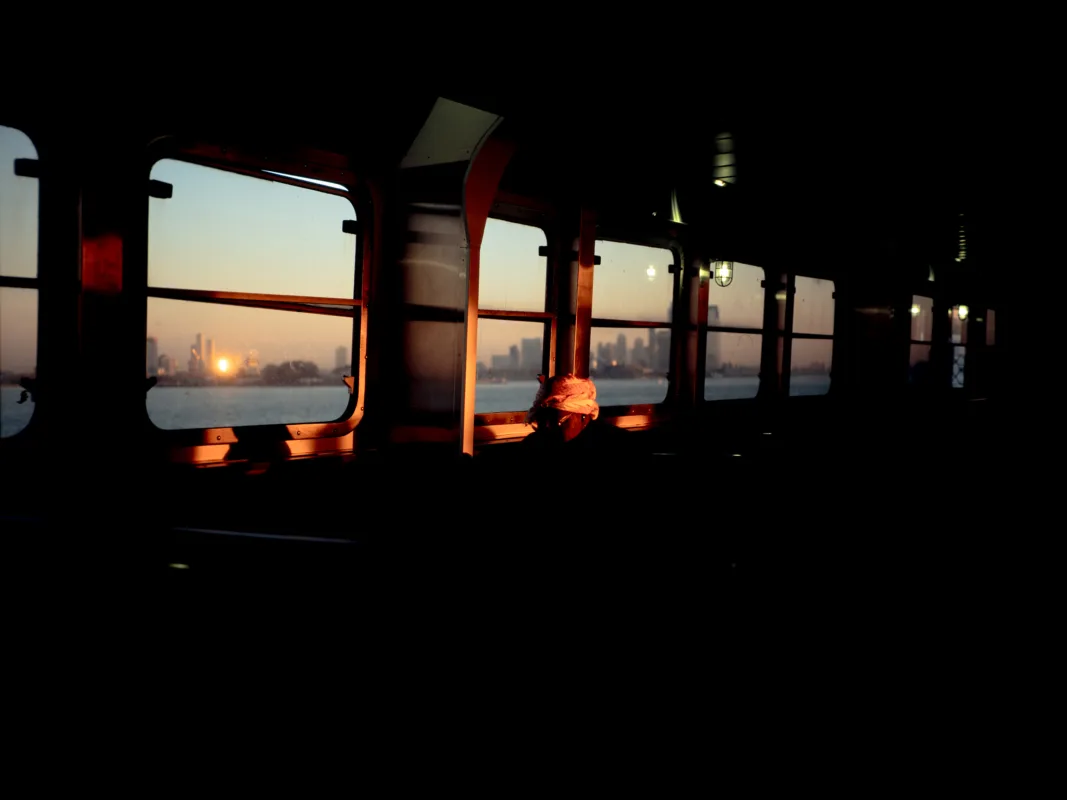
i LOVE NEW YORK Fiilm Photography Ludwig Favre

Why the Mamiya 7 Still Rules in the Digital Age

The Mamiya 7 is a relic of another era. Not because it’s outdated, but because digital has moved on without it.

While autofocus and AI-driven sensors dominate the conversation, the Mamiya 7 thrives in urban documentary work. It doesn’t just compete with digital, it proves film isn’t dead. It’s just different. The question is no longer whether you should shoot film or digital. It’s which one fits the job.

The Mamiya 7 vs Digital: A Fight Neither Side Wanted

The Mamiya 7 wasn’t built to lose. Digital didn’t invent the medium, it reinvented the rules, and film cameras like this one refused to adapt.

Digital’s speed, convenience, and post-processing power are undeniable. But the Mamiya 7 trades those advantages for something digital can’t replicate: **cinematic light**. Its 6×4.5 negative captures urban scenes with a depth and tone that digital sensors struggle to match. It doesn’t just see more detail, it renders it differently.

Film Photography Advantages: Why Grain and Noise Matter in Urban Work

Grain isn’t a flaw; it’s character. Digital noise is algorithmic, predictable. Film grain is organic, alive. It reacts to light the way skin does, warm in sunlight, cool under shade.

In urban documentary, this matters. Cities aren’t flat; they’re layered with texture, shadow, and mood. The Mamiya 7 doesn’t just record these layers, it preserves them. A digital sensor might smooth them out for clarity. Film embraces the mess.

Urban Documentary with Medium Format: The Mamiya 7’s Unfair Advantage

Medium format isn’t about resolution, it’s about **replication**. The Mamiya 7’s square negative forces a different way of seeing.

Digital cameras encourage framing for the frame. Film forces you to think in negatives: What will this look like on a lightbox? How will the edges behave? That discipline translates to stronger compositions, even if the final print is smaller than a digital capture.

Cinematic Light in Cities: Why Film Still Looks ‘Better’

Digital cameras are getting better at emulating film. But they still can’t replicate its **light response**. A Hasselblad or Phase One might mimic film tones, but the Mamiya 7’s negative has a life of its own.

In New York or Paris, where light shifts with weather and architecture, this is critical. Film doesn’t just capture light, it interprets it. Digital is precise; film is poetic.

Nostalgia: The Silent Force Behind the Mamiya 7’s Resurgence

Nostalgia isn’t just about the past, it’s about **meaning**. Digital is efficient. Film is ritualistic.

There’s a satisfaction in loading film, winding it, and waiting for the results that digital can’t replace. That ritual translates to a different kind of engagement with urban subjects. You slow down. You notice more. And that’s not just nostalgia, it’s better photography.

IA Replication: The Mamiya 7’s Secret Weapon in a Digital World

IA replication, the ability to scan film and match its textures digitally, is the closest thing to time travel. But it’s not about cheating.

When you replicate film, you’re preserving a way of seeing that digital has lost. The Mamiya 7 doesn’t just create images; it creates a **reference** for future generations. That’s power no digital camera can claim.

Conclusion: Digital is a Tool, Film is an Art

The Mamiya 7 isn’t obsolete, it’s just not for every job. Digital excels in speed and flexibility. Film excels in **memory**.

If you’re shooting urban documentary, if you care about light as more than exposure data, the Mamiya 7 is still the king. It doesn’t need to catch up, it needs to remind us what we’ve lost.
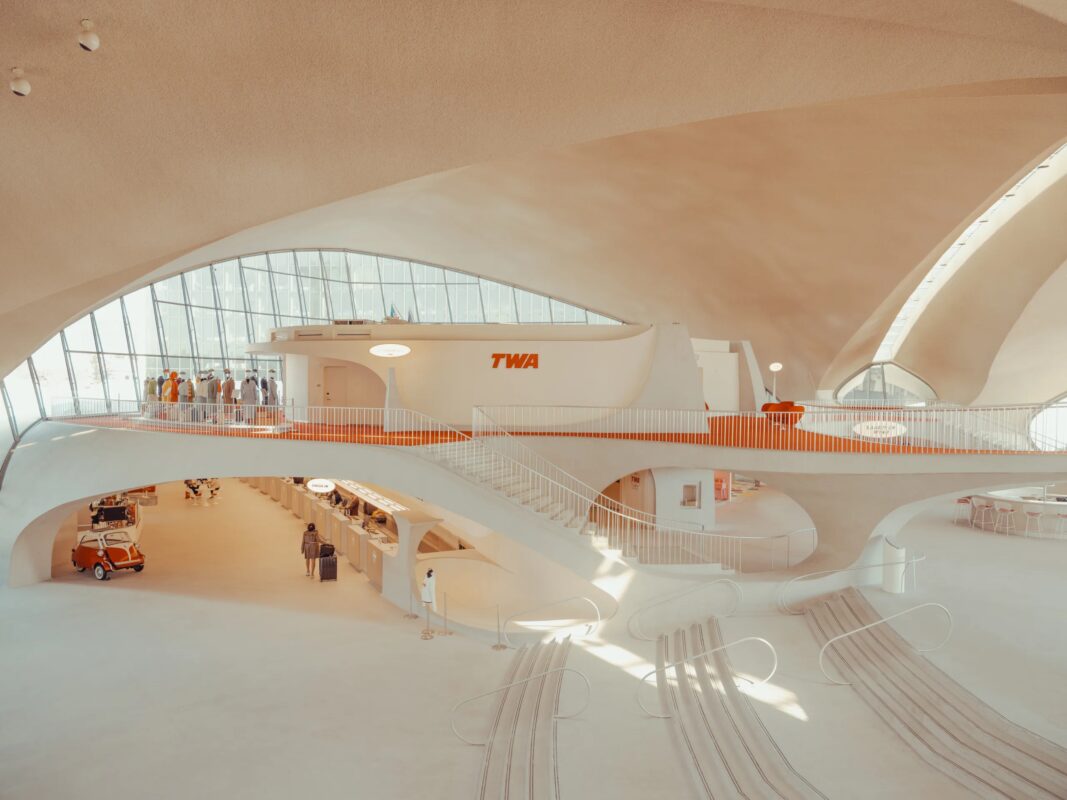
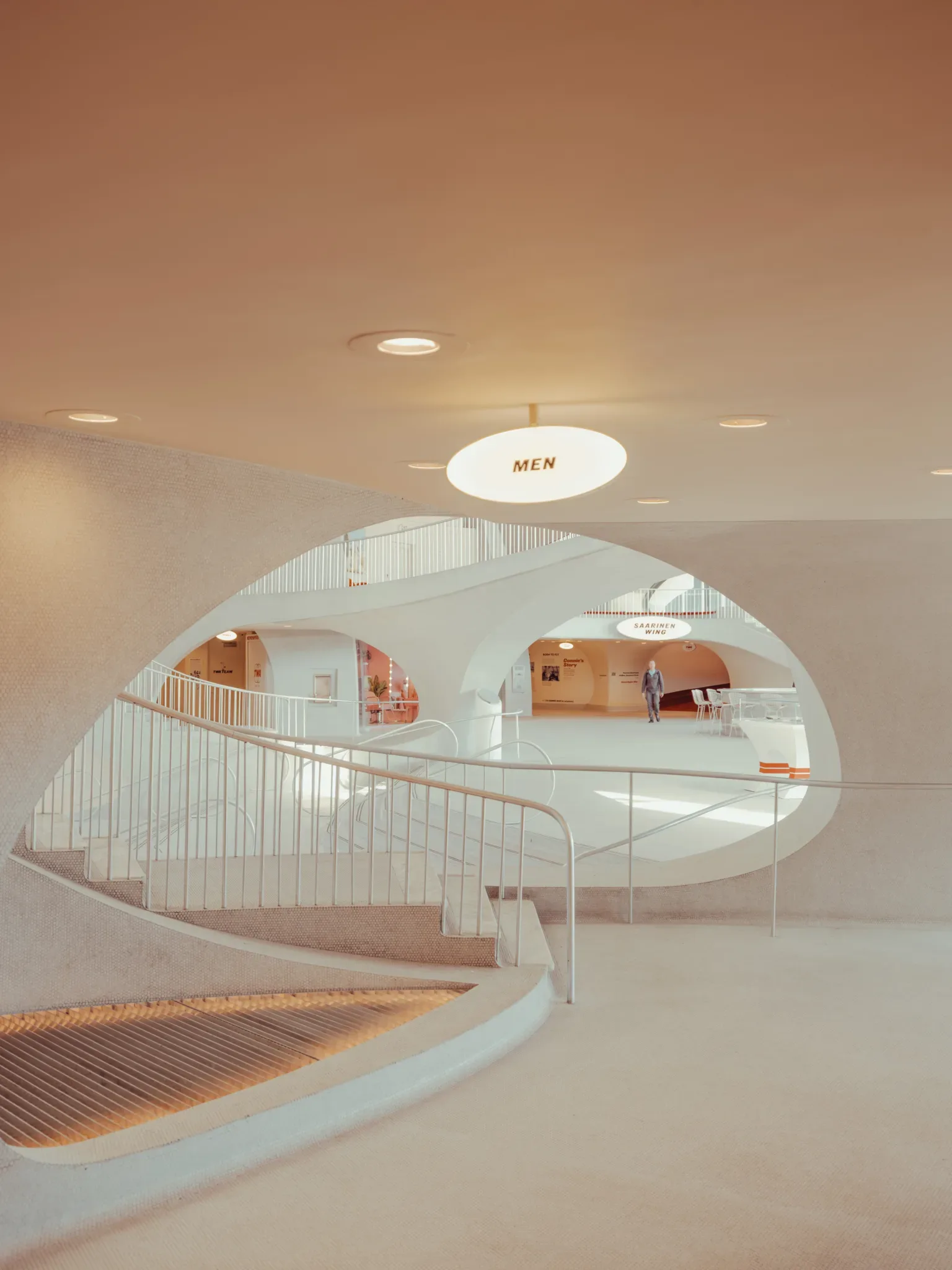
Photo by Ludwig Favre

TWA Hotel: A Mid-Century Suspension in Time

The TWA Hotel in Queens, New York, is a suspended moment in time. Its mid-century bones still hum with the rhythm of jet travel, passengers checking in, planes ascending, the hum of engines blending with the murmur of voices.

Yet it is also a quiet space. The concrete and steel, the angular lines of Eero Saarinen’s design, create a counterpoint to the chaos around it. Here, time feels different. Slower. As if the building itself remembers what travel was like before screens, before noise, before the rush.

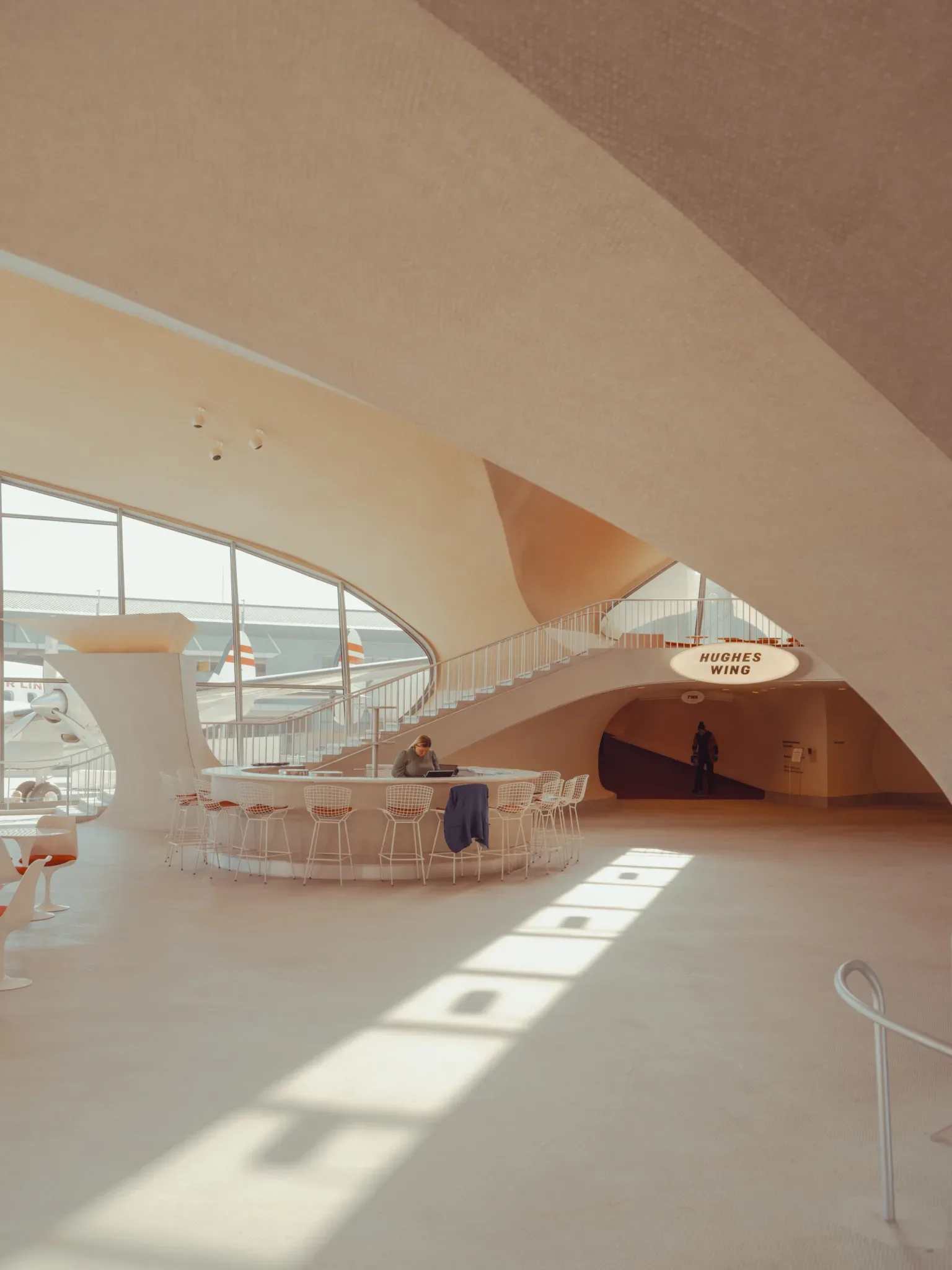
Photo by Ludwig Favre

Mid-Century as Nostalgia

I am drawn to places like this not just for their architecture but for the emotions they carry. The TWA Hotel is one of those rare spaces where mid-century modernism isn’t just a style, it’s an atmosphere. It reminds me of Palm Springs, of the American Southwest, of the way sunlight hits desert roads and poolside patios in old films.

This is the America I grew up with, the one from 1980s series, from cinematic memories, from a culture that feels both distant and intimate. The TWA Hotel captures that same suspended stillness, as if it were designed to hold onto time itself.

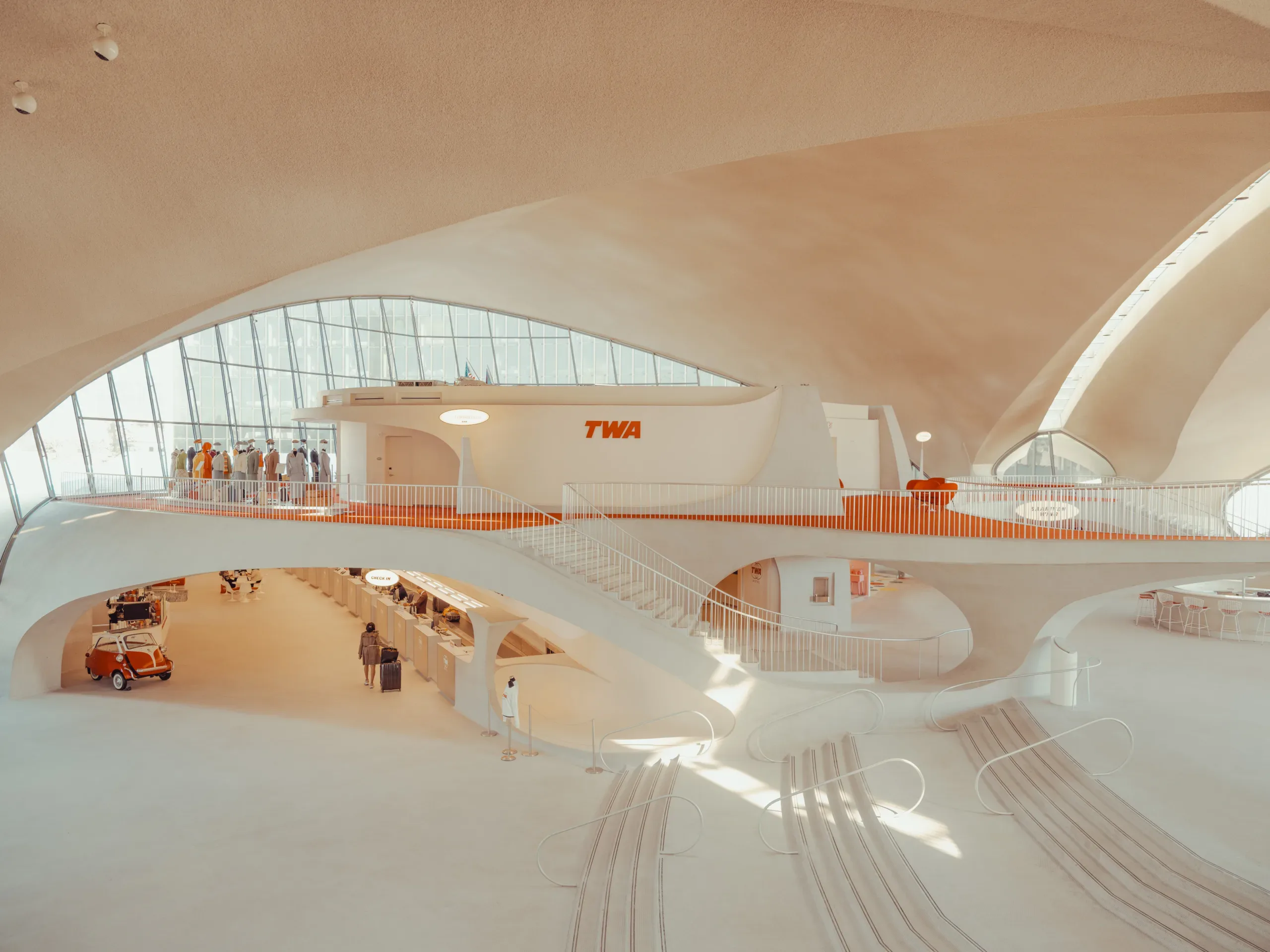
Photo by Ludwig Favre

The Poetry of Concrete and Steel

Photography, for me, is about finding the quiet within the obvious. The TWA Hotel’s concrete and steel are not just materials; they are textures that invite contemplation. The way light caresses the curved forms, how shadows stretch like fingers across the floors, these are the details that matter.

I shot this series with a Fujifilm GFX, Mamiya 7 II, its medium-format frame demanding patience. I wanted to slow down, to let the viewer linger on the building’s spatial poetry. The result is a counterpoint: motion in stillness, noise in quiet.

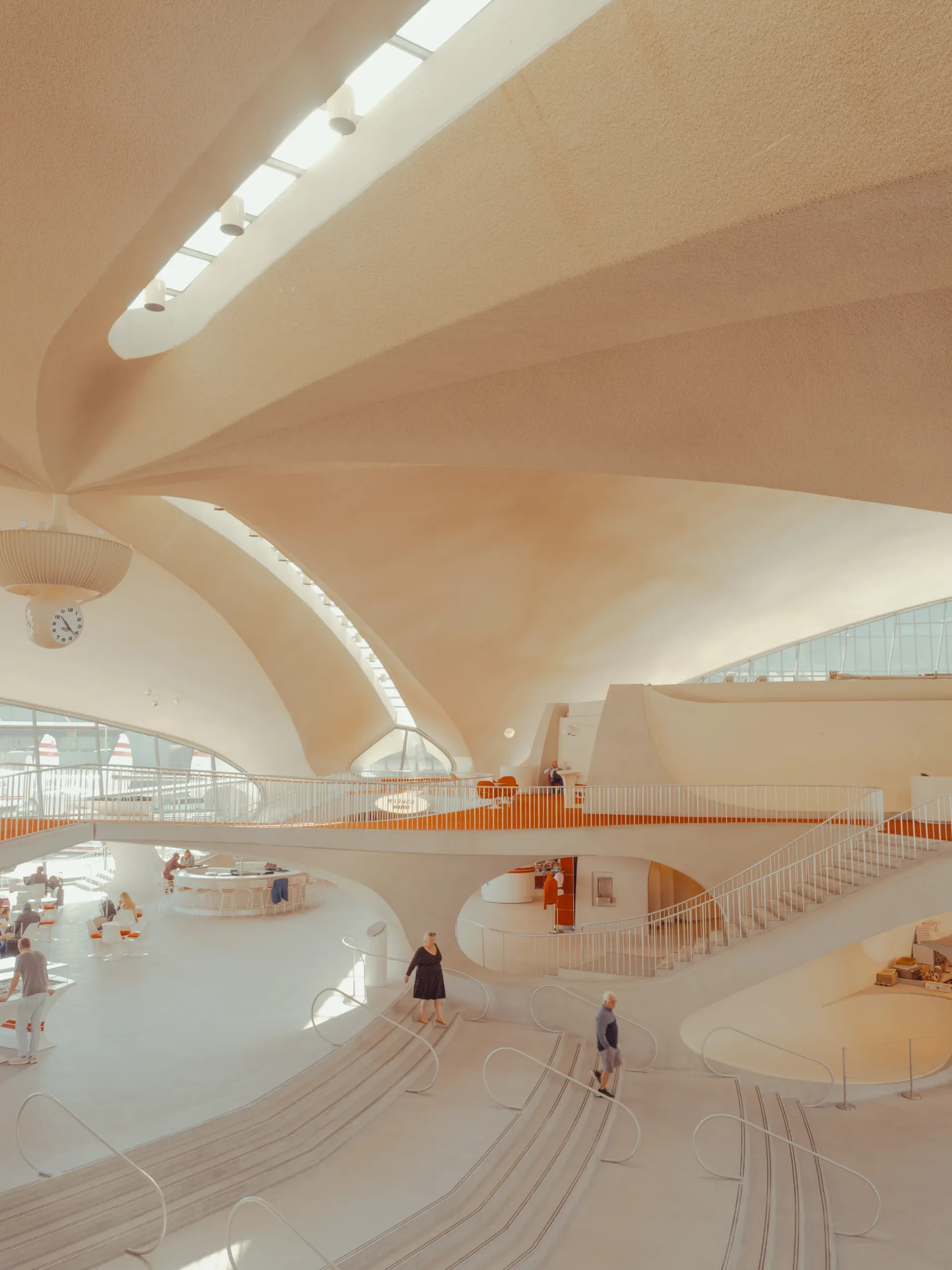
Photo by Ludwig Favre

Cinematic Stillness in Motion

The TWA Hotel exists in a liminal space, between departure and arrival, between past and present. My images try to reflect that tension. A shadow falls where no one stands. A reflection flickers on glass, as if catching the last frame of a film reel.

This is not just about the building; it’s about the feeling it evokes. The same way a 1970s soundtrack can transport you, the TWA Hotel does something similar for the eye and mind, a phantom America, both real and imagined.

Photo by Ludwig Favre

A Shared Nostalgia

There is no single truth in photography. But there are moments that resonate. For some, this may be nostalgia for a time they never lived through. For others, it might be the recognition of a place that feels familiar, even if they’ve only seen it in a photograph.

The TWA Hotel is one of those places. It exists at the intersection of memory and reality, of what was and what could have been. And in that space, I find my work lives.

The Passage of Time

Nostalgia is a tricky thing. It’s not just about looking back; it’s about the way time itself feels in a place. The TWA Hotel does this because it was designed to move, to breathe with its era, jet travel, the optimism of the 1960s, the promise of global connection.

But today, it also carries the weight of time passing. The airport has grown around it, the world has changed, and yet the building remains. It’s a reminder that some places are not just physical structures but emotional ones too, spaces where we can feel the echoes of what once was.

The Search for Childhood Memories

I think about this when I visit mid-century spaces. It’s not always about my own childhood, but about the way these places hold collective memories. The TWA Hotel does it because of its design, sure, but also because it feels like a portal to another time.

It’s in the way light hits the lobby, in the quiet corners where no one goes, in the way the building seems to whisper stories if you listen closely enough. For me, this is what photography does best: it captures not just places but the feelings tied to them, the ones we carry with us, even if we don’t always notice.

Counterpoint: The TWA Hotel Today

But let’s be honest, nostalgia isn’t always warm and fuzzy. Sometimes it’s bittersweet. The TWA Hotel is a prime example. It’s a place that feels both timeless and out of time, caught between its mid-century glory and the modern airport that surrounds it.

There’s something unsettling about that. It forces you to confront not just the past but also how much has changed. Yet, in that tension, there’s also beauty. The building doesn’t resist progress; it simply exists alongside it, a silent witness to time passing.

Conclusion

The TWA Hotel is more than architecture. It’s a feeling. It’s the way a place can hold onto time, even as the world moves on. If you’ve ever stood somewhere and felt that pull, whether it was a childhood memory or just the echo of something you never lived through, then this is for you.

Take a look. See what lingers there.

Ludwig Favre fine Art Prints

The Joy and Nostalgia of Travel Photography

The Joy and Nostalgia of Travel Photography

Travel photography has always been, for me, a mix of two emotions: the joy of discovery and the quiet nostalgia of knowing that every moment I capture will never happen again.

The beauty of discovering new places

There’s a special kind of happiness that comes with arriving somewhere new.
The air smells different. The light moves in unexpected ways. Every color feels slightly unfamiliar, and that unfamiliarity inspires me.

When I travel with my camera, I’m not just documenting a location. I’m listening to it.
Light bouncing off a wall, a reflection in a café window, someone walking through a frame at the perfect second these small details tell a larger story.

The nostalgia of frozen moments

Every photograph is a celebration, but also a quiet goodbye.
The light fades, the shadow moves, the silence shifts, and the image becomes a memory.
Photography lets me hold time still, but only for an instant. That bittersweet feeling is what keeps me inspired.

Less gear, more freedom

With time, I’ve learned that I don’t need a heavy backpack full of lenses.
I now prefer to travel light, with one or two cameras, each with a single lens.
Limitation brings freedom. It forces me to see differently, to focus on composition, light, and instinct instead of gear.

Carrying less has helped me reconnect with the spontaneity that first made me fall in love with photography, the pure joy of seeing, creating, and experimenting without rules.

Finding meaning in travel photography

In the end, travel photography isn’t only about distance or destinations.
It’s about being present, noticing how light touches a wall, how silence fills a space, how ordinary moments become extraordinary through attention.

So I’ll ask you:
What drives you to take photos when you travel  the discovery, the nostalgia, or the joy of creating something that will never exist again?