Enjoy 10% off your first Fine Art print by signing up for the newsletter.

TWA Hotel: A Mid-Century Suspension in Time
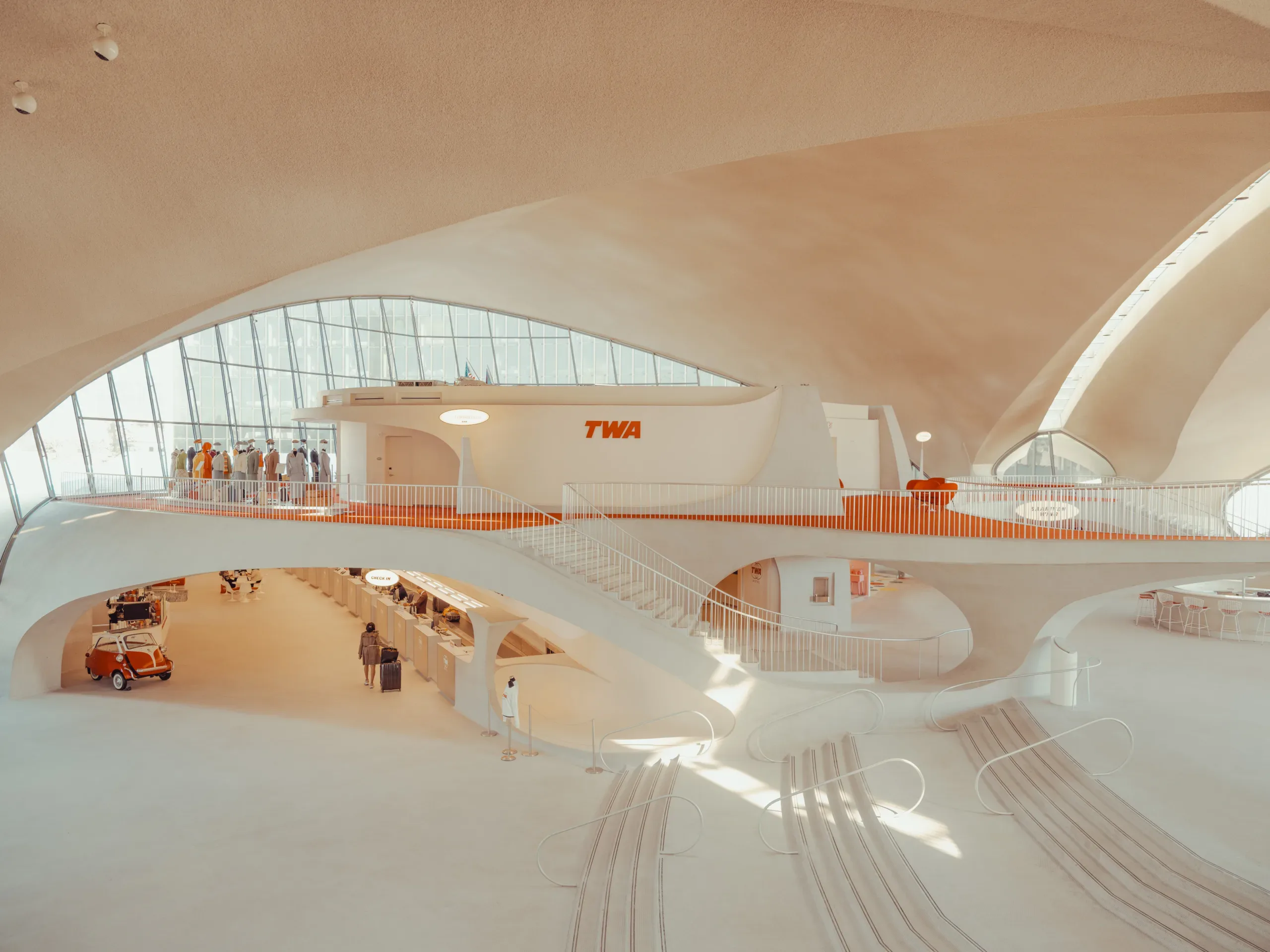
The TWA Hotel in Queens, New York, is a suspended moment in time. Its mid-century bones still hum with the rhythm of jet travel, passengers checking in, planes ascending, the hum of engines blending with the murmur of voices.
Yet it is also a quiet space. The concrete and steel, the angular lines of Eero Saarinen’s design, create a counterpoint to the chaos around it. Here, time feels different. Slower. As if the building itself remembers what travel was like before screens, before noise, before the rush.
Mid-Century as Nostalgia
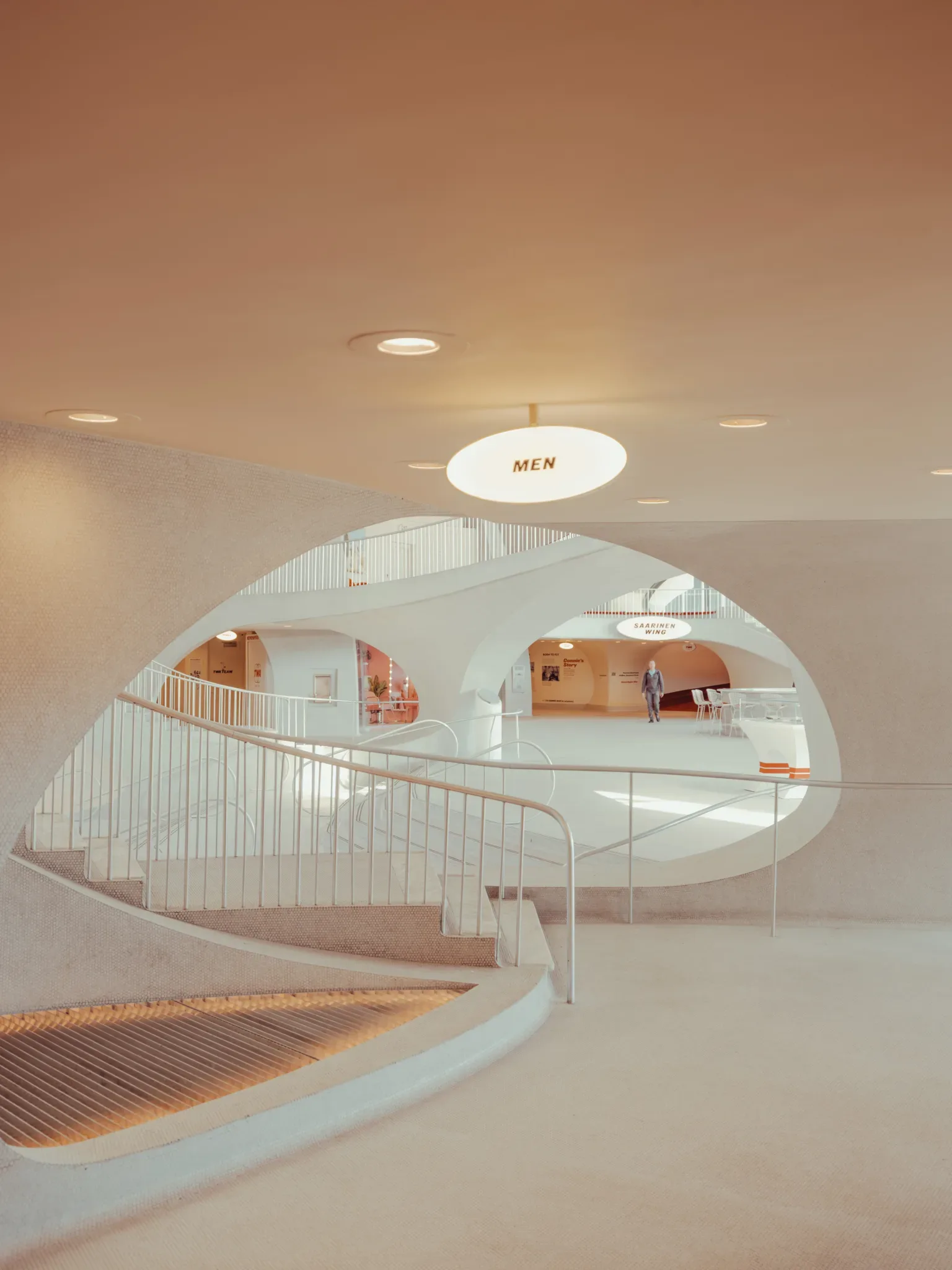
I am drawn to places like this not just for their architecture but for the emotions they carry. The TWA Hotel is one of those rare spaces where mid-century modernism isn’t just a style, it’s an atmosphere. It reminds me of Palm Springs, of the American Southwest, of the way sunlight hits desert roads and poolside patios in old films.
This is the America I grew up with, the one from 1980s series, from cinematic memories, from a culture that feels both distant and intimate. The TWA Hotel captures that same suspended stillness, as if it were designed to hold onto time itself.
The Poetry of Concrete and Steel
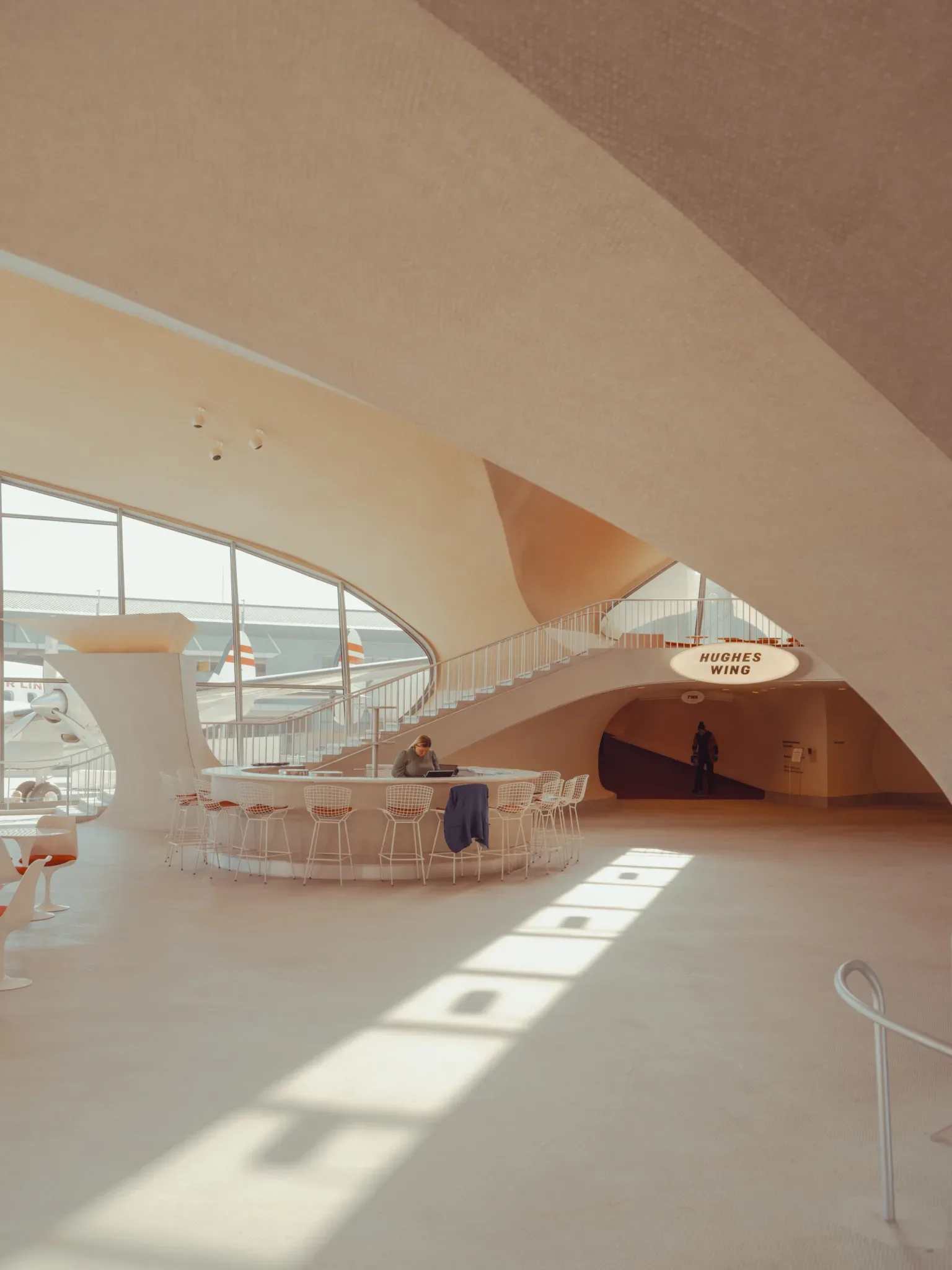
Photography, for me, is about finding the quiet within the obvious. The TWA Hotel’s concrete and steel are not just materials; they are textures that invite contemplation. The way light caresses the curved forms, how shadows stretch like fingers across the floors, these are the details that matter.
I shot this series with a Fujifilm GFX, Mamiya 7 II, its medium-format frame demanding patience. I wanted to slow down, to let the viewer linger on the building’s spatial poetry. The result is a counterpoint: motion in stillness, noise in quiet.
Cinematic Stillness in Motion
The TWA Hotel exists in a liminal space, between departure and arrival, between past and present. My images try to reflect that tension. A shadow falls where no one stands. A reflection flickers on glass, as if catching the last frame of a film reel.
This is not just about the building; it’s about the feeling it evokes. The same way a 1970s soundtrack can transport you, the TWA Hotel does something similar for the eye and mind, a phantom America, both real and imagined.
A Shared Nostalgia
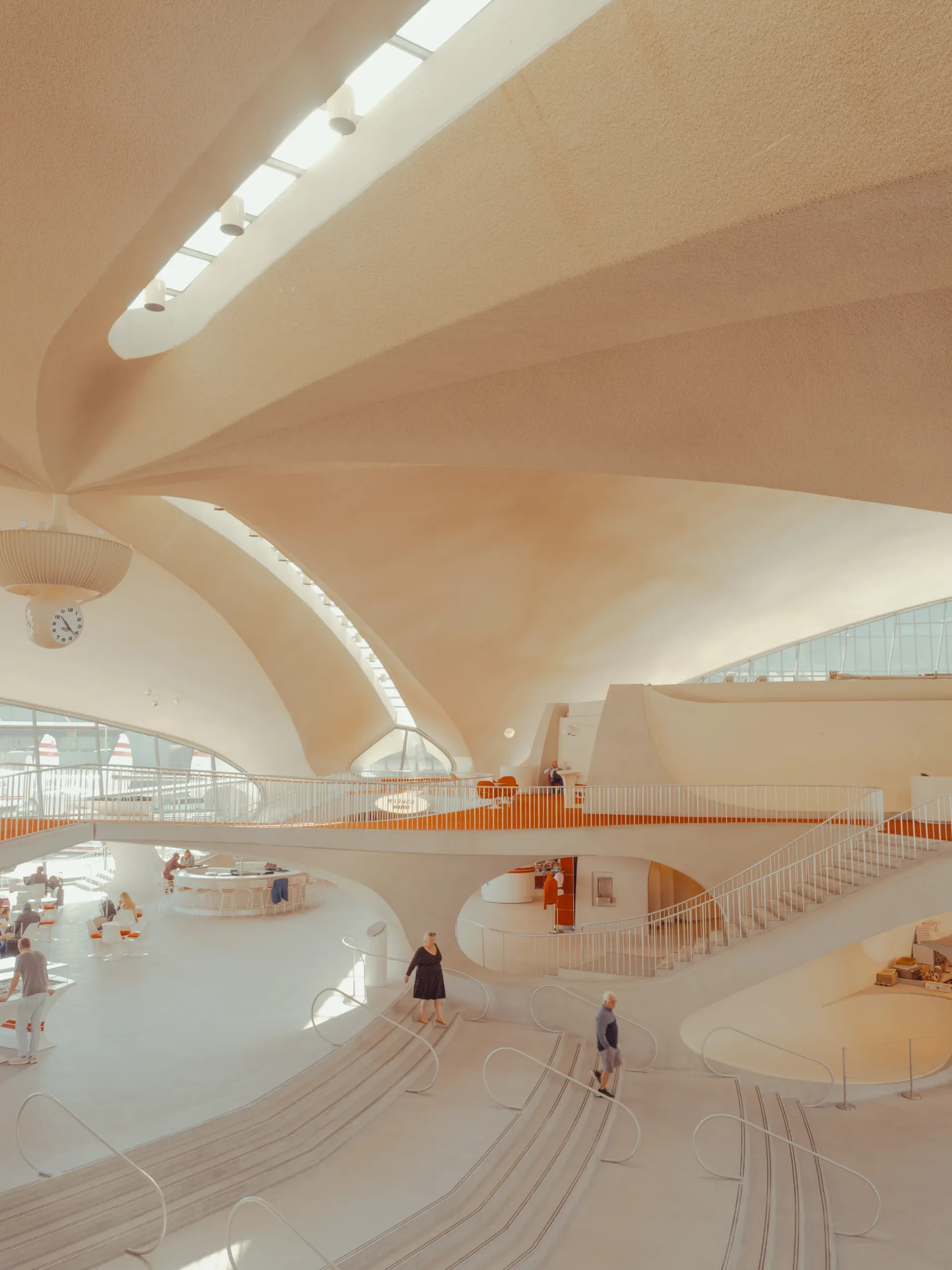
There is no single truth in photography. But there are moments that resonate. For some, this may be nostalgia for a time they never lived through. For others, it might be the recognition of a place that feels familiar, even if they’ve only seen it in a photograph.
The TWA Hotel is one of those places. It exists at the intersection of memory and reality, of what was and what could have been. And in that space, I find my work lives.
The Passage of Time
Nostalgia is a tricky thing. It’s not just about looking back; it’s about the way time itself feels in a place. The TWA Hotel does this because it was designed to move, to breathe with its era, jet travel, the optimism of the 1960s, the promise of global connection.
But today, it also carries the weight of time passing. The airport has grown around it, the world has changed, and yet the building remains. It’s a reminder that some places are not just physical structures but emotional ones too, spaces where we can feel the echoes of what once was.
The Search for Childhood Memories
I think about this when I visit mid-century spaces. It’s not always about my own childhood, but about the way these places hold collective memories. The TWA Hotel does it because of its design, sure, but also because it feels like a portal to another time.
It’s in the way light hits the lobby, in the quiet corners where no one goes, in the way the building seems to whisper stories if you listen closely enough. For me, this is what photography does best: it captures not just places but the feelings tied to them, the ones we carry with us, even if we don’t always notice.
Counterpoint: The TWA Hotel Today
But let’s be honest, nostalgia isn’t always warm and fuzzy. Sometimes it’s bittersweet. The TWA Hotel is a prime example. It’s a place that feels both timeless and out of time, caught between its mid-century glory and the modern airport that surrounds it.
There’s something unsettling about that. It forces you to confront not just the past but also how much has changed. Yet, in that tension, there’s also beauty. The building doesn’t resist progress; it simply exists alongside it, a silent witness to time passing.
Conclusion
The TWA Hotel is more than architecture. It’s a feeling. It’s the way a place can hold onto time, even as the world moves on. If you’ve ever stood somewhere and felt that pull, whether it was a childhood memory or just the echo of something you never lived through, then this is for you.
Take a look. See what lingers there.